
If you've been thinking about making a move in the Greater Houston area, here's something you should know: one of the most significant economic development announcements in northwest Harris County history just happened — and most people are still catching up to what it means for real estate.
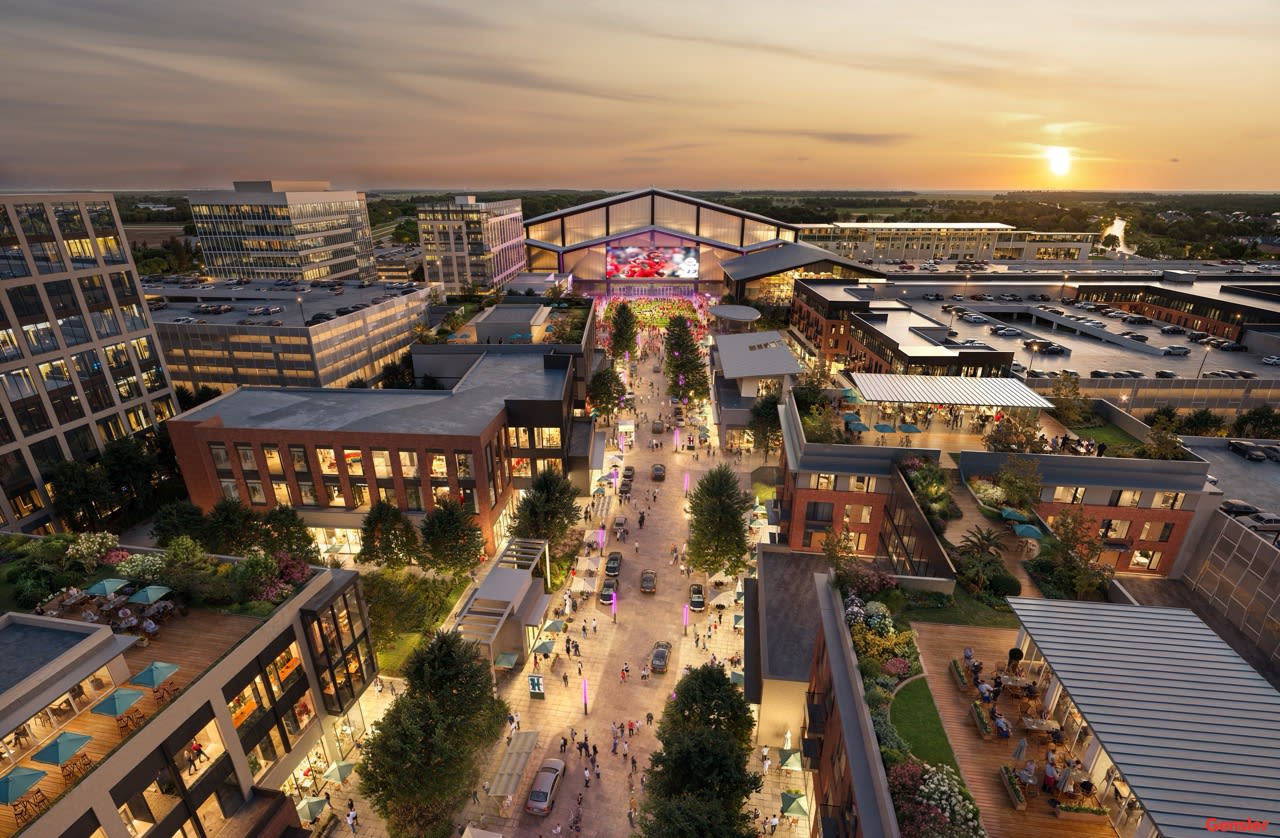
On February 12, 2026, the Houston Texans, Harris County, and Howard Hughes Holdings jointly announced the Toro District — an 83-acre mixed-use sports and entertainment destination in the Bridgeland community of Cypress, just off the Grand Parkway at Bridgeland Creek Parkway and Peek Road. The Texans are moving their global headquarters and training facility there, with a target move-in date of 2029.
This isn't just a sports story. For buyers and sellers in the Cypress area, it's a real estate story — and the window to act ahead of it is right now.
What Exactly Is the Toro District?
The scale of this project is worth pausing on. Of the 83 total acres, 22 will be dedicated to a state-of-the-art Texans global headquarters and training complex. The remaining 61 acres will become a full-blown destination hub featuring retail, restaurants, hotels, entertainment venues, and medical office space — all within Bridgeland Central, Howard Hughes' emerging 925-acre urban core.
Harris County commissioners approved the project unanimously through a public-private partnership, with the county committing approximately $150 million toward infrastructure — roads, pedestrian crossings, park space — while the Texans foot the bill for their own facilities. No taxpayer money goes toward building the team's headquarters.
The projected economic impact? $34 billion in long-term regional impact and more than 17,000 jobs tied to the Toro District itself, with broader estimates citing 60,000 jobs created across northwest Harris County over the next decade.
That's not a small development. That's a transformation.
Bridgeland Was Already on a Trajectory
Before we even get to the Texans announcement, it's worth understanding where Bridgeland stood heading into 2026 — because this community was already one of the most sought-after addresses in Greater Houston.
The numbers tell the story clearly:
- Median home sale price: $490,000, with price per square foot up 2.6% year over year according to Redfin data
- 985 homes sold in 2023 — up 74% from 567 the prior year — ranking Bridgeland #5 nationally among master-planned communities according to real estate consultant RCLCO
- The 77433 ZIP code, which includes Bridgeland, was ranked the #1 "hottest" ZIP code in the entire United States by Opendoor, based on the number of homes purchased within 90 days of listing
- Over half of all Cy-Fair home sales in recent months have come from the 77433 ZIP code alone
Bridgeland has also consistently attracted major corporate investment independent of the Texans. Chevron has already purchased over 77 acres within Bridgeland Central, the same urban core where the Toro District will be built. That's not a coincidence — it's a signal that large, sophisticated organizations see the long-term trajectory of this corridor.
The community itself spans 11,400 acres with 3,000+ acres dedicated to lakes, trails, and open space. It was named Master-Planned Community of the Year by the National Association of Home Builders in 2024. It's zoned into the highly rated Cypress-Fairbanks ISD, with schools located directly within the community.
In short: Bridgeland wasn't waiting for something to happen. It was already happening.
What Does a Development Like This Actually Do to Home Values?
This is the question I want to answer honestly — because I'd rather give you real information than hype.
The research on NFL stadiums and home values is genuinely mixed. A well-cited Trulia analysis found that about two-thirds of neighborhoods near existing NFL stadiums have higher home values than comparable non-stadium neighborhoods, with some markets like Philadelphia seeing homes near stadiums priced as much as 44% higher than the broader metro. A study published in the Journal of Sports Economics found housing values near sports facilities increased by 4.7% on average. And a comprehensive study by economists Carlino and Coulson found that cities with NFL franchises saw rents run approximately 8% higher across the board.
But here's the important caveat: standalone stadiums used eight times a year have often shown limited or even negative price impact on immediate surrounding areas. The research supports that clearly too.
The Toro District is a fundamentally different kind of project. This is not a stadium sitting in a parking lot. It's a year-round mixed-use destination — retail, dining, hotels, medical offices, entertainment, and a sports campus — built inside an already thriving master-planned community that has its own commercial urban core in active development. That combination is much closer to what's driven sustained real estate appreciation in places like The Woodlands, which was also a Howard Hughes project, and which built its value over decades through exactly this kind of layered, long-term development.
The more relevant question isn't "what do NFL stadiums do to home values?" It's: what happens to real estate in a fast-growing suburban corridor when a $34 billion economic catalyst is announced, 17,000 jobs are projected, and infrastructure investment is accelerated by decades?
History suggests the answer is: values go up — and they tend to move before the construction cranes arrive, not after.
What This Means If You're Thinking About Moving Up
If you're a current homeowner in Cypress, Katy, or the surrounding area who has been thinking about upgrading — more space, a better location, a neighborhood you're truly proud of — this is a moment worth paying attention to.
Here's why the timing matters for buyers specifically:
You can still buy ahead of the demand curve. The Toro District won't open until 2029. Infrastructure investment, job creation, and the broader commercial buildout will play out over years. But buyer interest in Bridgeland and surrounding Cypress communities tends to move faster than the construction timeline. Sophisticated buyers — especially those relocating from out of state or internationally — are already paying attention to this announcement.
Your current home has equity to work with. If you've owned in the Houston area for the past few years, you've likely built meaningful equity. The opportunity is about leveraging that equity now, while the destination community you're moving into is still priced ahead of the full Toro District effect rather than after it.
The competition will increase. Bridgeland was already the #1 selling master-planned community in Greater Houston and one of the top five nationally. Add an NFL headquarters, a destination entertainment district, 17,000 projected jobs, and a major infrastructure commitment from Harris County, and you have a community that is going to attract even more buyers — from Houston, from Texas, and from beyond.
A Note for Current Bridgeland Owners
If you already own in Bridgeland, this announcement likely felt like validation of a decision you made years ago. It was. But it also raises a practical question: is this the right time to sell your current home and move up within the community, or to leverage your equity in a way that serves your family's next chapter?
That's a conversation worth having — because the answer is different for every situation, and it depends on your timeline, your equity position, and what you're trying to accomplish.
Let's Talk
I'm Mike Glenny with Glenny Real Estate, and I've been working with buyers and sellers across Cypress, Katy, Hockley, and The Woodlands for years. I specialize in helping buyers make smart, well-timed decisions — not rushed ones, and not ones based on hype.
If you want to talk through what the Toro District announcement means for your specific situation — whether you're thinking about buying in Bridgeland, selling in the area, or just trying to understand what your home is worth right now — I'd love to have that conversation.
📞 281-845-3669
🌐 glennyrealestate.com
Your Window to Real Estate.